
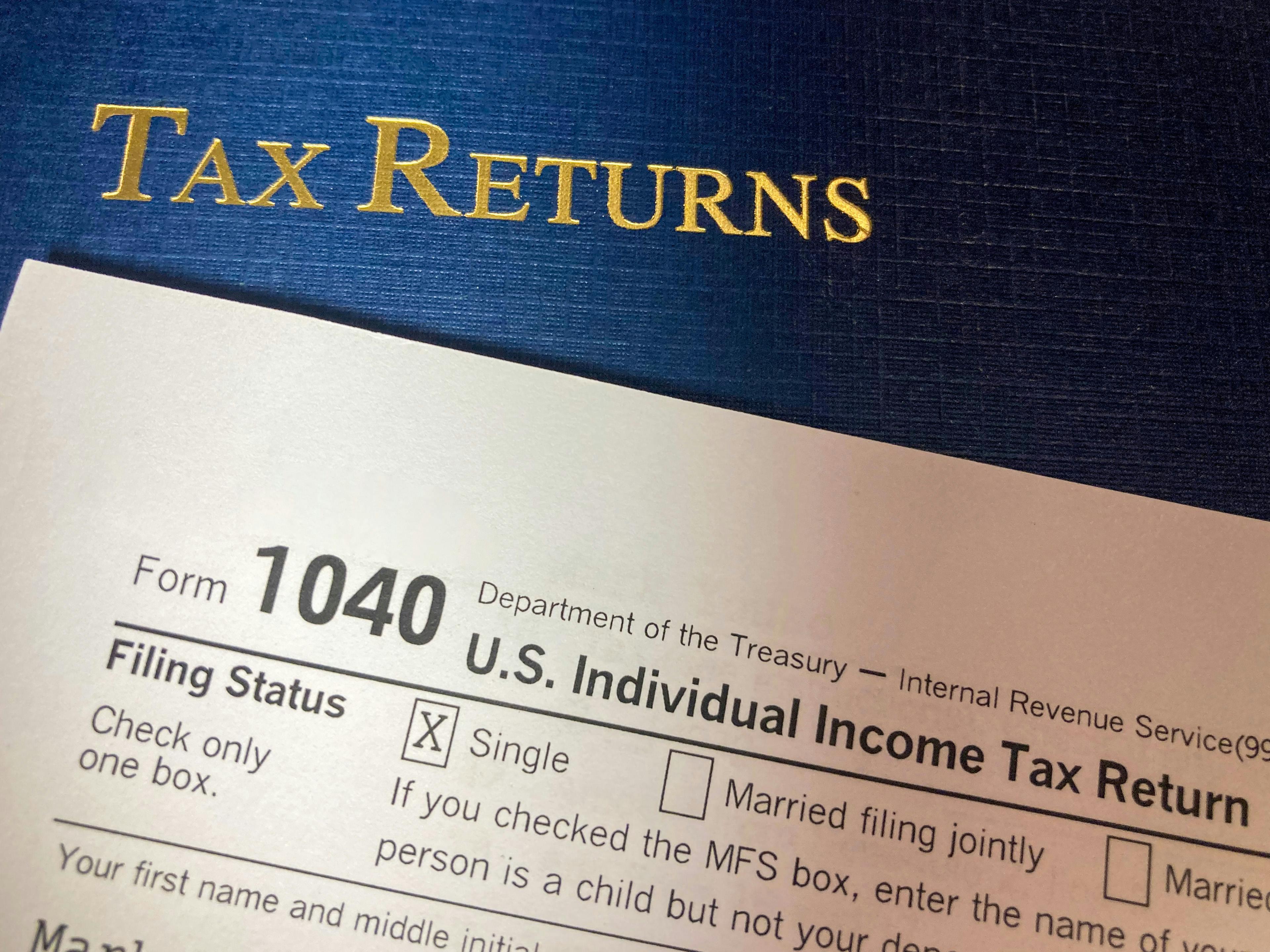
Q1 2026 Commentary: Fun with Taxes! The Value of Being Proactive
Pine Haven Investment Counsel, Inc. – Commentary – 1st Quarter 2026
Casey Fitchett CFP® & Paige Johnson Roth, CFA®
"When it comes to taxes, there are two types of people: those that get it done early, also known as psychopaths, and then the rest of us." – Jimmy Kimmel.
As we move through the first quarter of 2026, investors are navigating a landscape shaped by persistent inflation uncertainty, evolving interest rate expectations, and ongoing tax policy discussions. While market conditions often dominate headlines, one of the most powerful, and controllable, drivers of long-term wealth is tax planning.
For individuals approaching or already in retirement, thoughtful tax strategies can significantly enhance after-tax income, extend portfolio longevity, and create greater flexibility in meeting both lifestyle and legacy goals.
Why Tax Planning Matters More Than Ever
Retirement fundamentally changes how income is generated and taxed. Instead of relying primarily on earned income, retirees draw from a mix of sources: Social Security, pensions, and withdrawals from tax-deferred, tax-free, and taxable accounts. Without coordination, these income streams can unintentionally push retirees into higher tax brackets, increase Medicare premiums, and trigger taxes on Social Security benefits. Additionally, there have been multiple changes to tax laws in the last ten years that have added to the complexity.
Proactive tax planning aims to smooth income over time, minimize lifetime tax liability, reduce surprises, and even simplify estate planning.
Roth Conversions: Paying Taxes on Your Terms
One of the most effective tools available today is a Roth conversion. This strategy involves moving assets from a traditional IRA to a Roth IRA, paying taxes now in exchange for tax-free growth and withdrawals later.
Why consider Roth conversions?
• Tax diversification: Creates flexibility to manage taxable income in retirement
• Future tax hedge: Protects against potential increases in tax rates
• No required minimum distributions (RMDs): Roth IRAs are not subject to lifetime RMDs
• Legacy benefits: Heirs receive tax-free income
The years between retirement and the start of RMDs (often referred to as the “tax planning window”) are particularly attractive for conversions. During this period, income may be temporarily lower, allowing retirees to convert assets at more favorable tax rates.
A disciplined, multi-year conversion strategy — rather than a single large conversion — often provides the best outcome.
Required Minimum Distributions (RMDs): Planning Ahead
Under current law, RMDs generally begin at age 73 and require retirees to withdraw a portion of their tax-deferred accounts annually. These withdrawals are taxed as ordinary income and can have several ripple effects:
• Increasing overall tax liability
• Triggering higher Medicare Part B and Part D premiums (IRMAA surcharges)
• Causing more Social Security benefits to become taxable
Without planning, large account balances can lead to sizable RMDs later in life (and therefore higher taxes). Remember that an IRA is essentially a Joint Account with the IRS/US Government.
Strategies to manage RMD impact include:
• Gradual Roth conversions earlier in retirement
• Strategic withdrawals prior to RMD age
• Coordinating withdrawals across account types
• After age 70 ½ making some distributions to charitable organizations (see below)
Donor-Advised Funds (DAFs): Tax Efficiency Meets Philanthropy
For charitably inclined investors, Donor-Advised Funds (DAFs) offer a highly efficient way to give while reducing taxes.
Key advantages:
• Immediate tax deduction in the year of contribution
• Ability to donate appreciated securities and avoid capital gains taxes
• Flexibility to distribute funds to charities over time
DAFs can be particularly powerful in high-income years, such as after a business sale, bonus, or Roth conversion. By “bunching” charitable contributions into a single year, investors may exceed the standard deduction and maximize tax benefits. Because of recent changes in tax law from the OBBBA, it was more advantageous to contribute to a DAF before the end of the year in 2025. Because we were following the legislative changes closely, we encouraged many of our clients to bunch multiple years of their contributions in the 2025 tax year.
Qualified Charitable Distributions (QCDs): A Smart RMD Strategy
For retirees over age 70½, Qualified Charitable Distributions (QCDs) allow direct transfers from an IRA to a qualified charity.
Benefits include:
• Satisfying RMD requirements
• Excluding the distribution from taxable income
• Potentially reducing Medicare premiums and taxation of Social Security
Unlike traditional charitable donations, QCDs reduce adjusted gross income (AGI), which can have broader tax advantages.
Additional Tax-Smart Strategies
Beyond these core tools, several additional approaches can further enhance tax efficiency:
• Asset location: Placing tax-inefficient investments in tax-deferred accounts and tax-efficient investments in taxable accounts
• Tax-loss harvesting: Offsetting gains with losses in taxable portfolios
• Capital gains management: Realizing gains strategically in lower-income years
• Withdrawal sequencing: Coordinating which accounts to draw from each year
Each of these strategies contributes to a more holistic tax plan.
Strategy in Action!
At Pine Haven, we regularly request our clients’ tax returns to review in our software. Once we receive the return, we look for opportunities on both the income and the deduction sides.
1. After collecting previous years’ tax returns for one client household, we noticed that because their overall income was low, we had numerous opportunities. They were married filing jointly, and one of the clients was claiming Social Security already. As the other client was on the cusp of Full Retirement Age, we looked at scenarios to help her decide when to start claiming her benefit. As the couple did not need the additional income from the second spouse’s Social Security, she was willing to wait until age 70 to claim. This allowed us to:
• Take about $8,500 of capital gains with no tax liability (0% capital gains bracket!)
• Take advantage of lower tax brackets and do Roth conversions from their Traditional IRA accounts. We used our tax planning software to solve for the maximum amount of ordinary income that would “fill up” the 12% bracket with converted Roth funds.
• As the younger spouse is still working in a part time capacity, her earned income allows us the ability to contribute to a Roth IRA for long-term, tax-free growth. After uploading their return for the previous year, there was no doubt about her amount of earned income, so we were able to complete the Roth contribution for her.
2. Ease of Taxes:
• Many of our clients who are already taking their Required Minimum Distributions do so on a regular monthly schedule throughout the year. It often makes more sense for them to have taxes withheld from these regular distributions than to keep up with sending in quarterly estimated payments. In early 2025, we coordinated with a client’s CPA to confirm withholding amounts from their RMD in lieu of estimated payments to both federal and state. Although this switch doesn’t necessarily save clients money on taxes, it did reduce their stress and confusion to know that we had another set of eyes on the situation!
3. Another Set of Eyes:
• Tax preparers have a very difficult – and often stressful – job. With their work being concentrated in a few short months, they are often stretched very thin. As we collect tax returns from clients, we are able to look at them with another set of eyes and have occasionally raised a flag for review by both the client and the CPA when we notice a line looks amiss. Just this past year we saved one client thousands of dollars after noticing that they should have been paying estimated payments throughout the year. We worked with the CPA to pursue a unique strategy that ensured the client would not be subject to any penalties when they filed in April.
Bringing It All Together
Tax planning is not a one-time event — it is an ongoing process that should evolve alongside market conditions, tax laws, and personal circumstances. The most effective plans integrate investment strategy, income needs, and tax considerations into a cohesive framework.
By taking a proactive approach — particularly in the years leading up to and early in retirement — investors can:
• Reduce lifetime tax liability
• Increase after-tax retirement income
• Improve portfolio sustainability
• Enhance legacy outcomes
Final Thoughts
While we cannot control markets or future tax policy, we can control how and when we recognize income. Thoughtful tax planning transforms uncertainty into opportunity and ensures that more of your wealth stays working for you and your family.
As always, we recommend reviewing your tax strategy regularly with your financial advisor and tax professional to ensure it remains aligned with your long-term goals.